Cape Town Container Terminal (CTCT)
Positioned in the Ben Schoeman Dock, the CTCT is a premier gateway for South Africa's agricultural exports. Explore the technical specifications and operational dynamics of the terminal.
Infrastructure and Berth Specifications
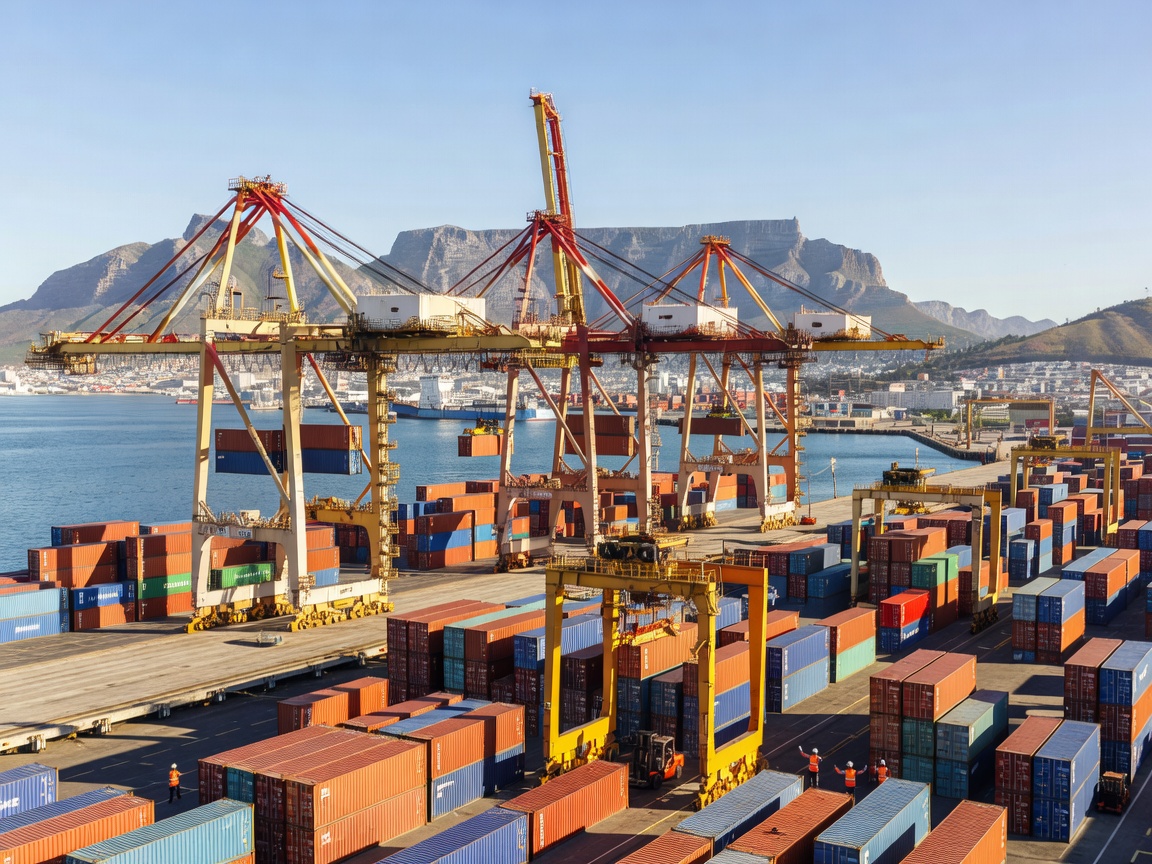
Operated by Transnet Port Terminals (TPT), the Cape Town Container Terminal (CTCT) is situated within the protected waters of the Ben Schoeman Dock. The terminal is structured around several deep-water berths, specifically designed to accommodate container vessels of varying classes. Over the past decade, significant capital has been invested in deepening these berths and reinforcing the quay walls to accommodate the newer generation of larger, deeper-draft vessels.
The terminal features an extensive back-of-port stacking area, governed by a rigid grid system to optimize container retrieval and placement. The handling equipment relies heavily on a fleet of Ship-to-Shore (STS) gantry cranes, which interface directly with the vessels, and Rubber-Tyred Gantries (RTGs) which manage the stacking yards. The phased upgrading of RTGs to more fuel-efficient, hybrid models has been a key initiative in reducing the terminal’s carbon footprint and mitigating noise pollution for the nearby city center.
The Reefer Advantage: Agricultural Exports
What sets the CTCT apart from many global counterparts is its exceptional capacity for handling refrigerated containers, known as reefers. The Western Cape is a massive producer of agricultural goods, notably deciduous fruit (apples, pears, grapes) and citrus. Because these commodities are highly perishable, a robust cold chain is non-negotiable.
The terminal is equipped with thousands of specialized reefer plug points, allowing containers to remain powered and climate-controlled while awaiting loading. During peak export seasons, the terminal operates at near-maximum reefer capacity. The efficiency of the CTCT during these critical months directly impacts the profitability of South African farmers and the freshness of produce on European and Asian supermarket shelves.
Navigating Operational Challenges: The "Cape Doctor"
Despite its advanced infrastructure, the CTCT faces unique operational hurdles dictated by the local climate. Cape Town is renowned for its fierce south-easterly wind, affectionately termed the "Cape Doctor." During the peak summer export season, these winds can routinely exceed the safe operating parameters for STS cranes.
When wind speeds surpass critical thresholds, safety protocols mandate the cessation of crane operations to prevent accidents and container damage. These wind-bound delays create severe bottlenecks, causing vessel queues in the anchorage and truck congestion at the terminal gates. To mitigate these disruptions, port authorities constantly assess wind prediction modeling to optimize loading windows, and there is ongoing research into aerodynamic crane designs and automated lashing platforms that can operate safely in higher wind speeds.
Comparisons and Capacity Upgrades
When compared to the Port of Durban, which handles the bulk of South Africa's automotive and general consumer goods imports, the CTCT is distinctly export-oriented, characterized by its specialized agricultural handling. While it may not move the sheer TEU (Twenty-foot Equivalent Unit) volume of Durban, its operational value per container is exceptionally high due to the nature of the cargo.
Future capacity upgrades are focused not on expanding the physical footprint—which is strictly limited by the surrounding urban environment—but on increasing throughput velocity. This includes the implementation of advanced Terminal Operating Systems (TOS), the introduction of straddle carriers for faster yard transfer, and the optimization of the truck appointment system to smooth out the arrival curve of road freight.
Strategic Value
The Cape Town Container Terminal remains a linchpin in the national supply chain. Its ability to balance the technical demands of heavy container lifting with the delicate requirements of agricultural cold chains secures its status as an indispensable asset to the South African economy.