Marine Services & Dry Docks
Behind the logistics of cargo handling lies a complex ecosystem of marine services. Discover the critical role of pilotage, tugs, dredging, and ship repair facilities.
Pilotage and Vessel Traffic Service (VTS)
The Port of Cape Town operates under a regime of compulsory pilotage. This means that all commercial vessels exceeding a specific gross tonnage must take aboard a marine pilot employed by the Transnet National Ports Authority (TNPA) before entering port limits. The pilot boards the vessel via helicopter or pilot boat in the open waters of Table Bay, assuming navigational control to safely guide the ship through the breakwaters and into its designated berth.
This operation is closely monitored and coordinated by the Vessel Traffic Service (VTS). Operating out of a centralized control tower, the VTS functions much like air traffic control, managing the scheduling, sequencing, and safe separation of all vessel movements. They utilize advanced radar, AIS (Automatic Identification System), and meteorological data to ensure that tight shipping channels remain collision-free.
Tugboat Operations and Bollard Pull
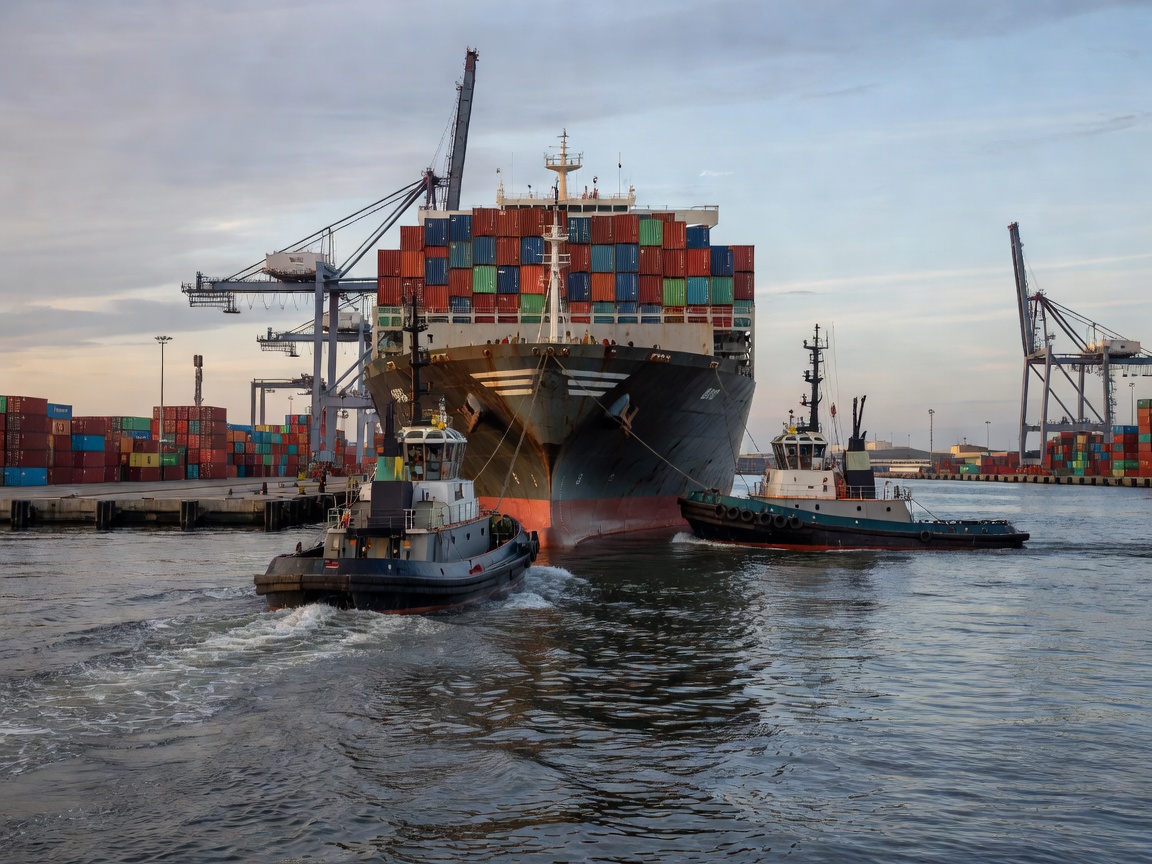
Once a vessel approaches its berth, the pilot relies on a fleet of highly maneuverable tugboats to push, pull, and precisely position the ship. The Port of Cape Town maintains a modern fleet of Azimuth Stern Drive (ASD) and Voith Schneider propelled tugs. These vessels are categorized by their "bollard pull"—a standardized measure of their pulling capacity in tons.
Modern tugs in the port boast substantial bollard pull capabilities, often exceeding 70 tons. This power is essential when maneuvering massive container ships or bulk carriers, particularly during adverse wind conditions. The tugs also serve a secondary, crucial function: they are equipped with high-capacity foam and water monitors, acting as first responders for marine firefighting and salvage operations within port limits.
Dredging: Maintaining the Depths
For a port to remain viable, it must guarantee the advertised depth of its approach channels and basins. Ocean currents, tidal movements, and sediment runoff continuously deposit sand and silt onto the seafloor, threatening to reduce the available draft.
TNPA conducts regular maintenance dredging operations using trailing suction hopper dredgers and grab dredgers. The dredged material is typically transported out to designated offshore spoil grounds. Periodic capital dredging is also undertaken to deepen berths and widening turning basins, a critical requirement as shipping lines continuously deploy larger vessels with deeper drafts to maximize economies of scale.
Ship Repair: Sturrock and Robinson Dry Docks
Cape Town’s geographical position makes it a strategic location for ship repair, particularly for vessels rounding the Cape of Good Hope or those servicing the West African oil and gas fields. The port houses extensive ship repair infrastructure, heavily utilized by international fleets.
The crown jewel of these facilities is the Sturrock Dry Dock, located in the Duncan Dock. With a staggering length of 360 meters and a width of over 47 meters, it is one of the largest dry docks in the southern hemisphere. It can accommodate massive tankers, offshore drilling rigs, and heavy lift vessels for comprehensive hull repairs, painting, and mechanical refits.
Complementing the Sturrock facility is the older, smaller Robinson Dry Dock in the Victoria Basin, which primarily services the local fishing fleet, offshore supply vessels, and luxury yachts. Together with several syncrolifts and slipways, these repair facilities generate significant revenue and employ a vast network of specialized maritime engineering contractors.
Bunkering and Provisions
Beyond navigation and repair, marine services include comprehensive bunkering (refueling) and provisioning. Specialized bunker barges deliver heavy fuel oil and marine diesel directly to vessels at berth. Simultaneously, chandlers supply ships with everything from fresh local produce to vital engine spares, ensuring that crews are provisioned for the next leg of their ocean voyage.